
Mold Testing
Sampling and laboratory analysis can help identify whether suspected growth is mold and document conditions when testing is appropriate.
Serving Denver, Colorado & surrounding areas
Mon–Fri 8am–6pm · Sat 9am–2pm
Denver mold abatement
Get a clear plan for containing affected areas, removing contaminated materials, correcting moisture conditions, and reducing the chance of the problem returning.
Assess the full condition
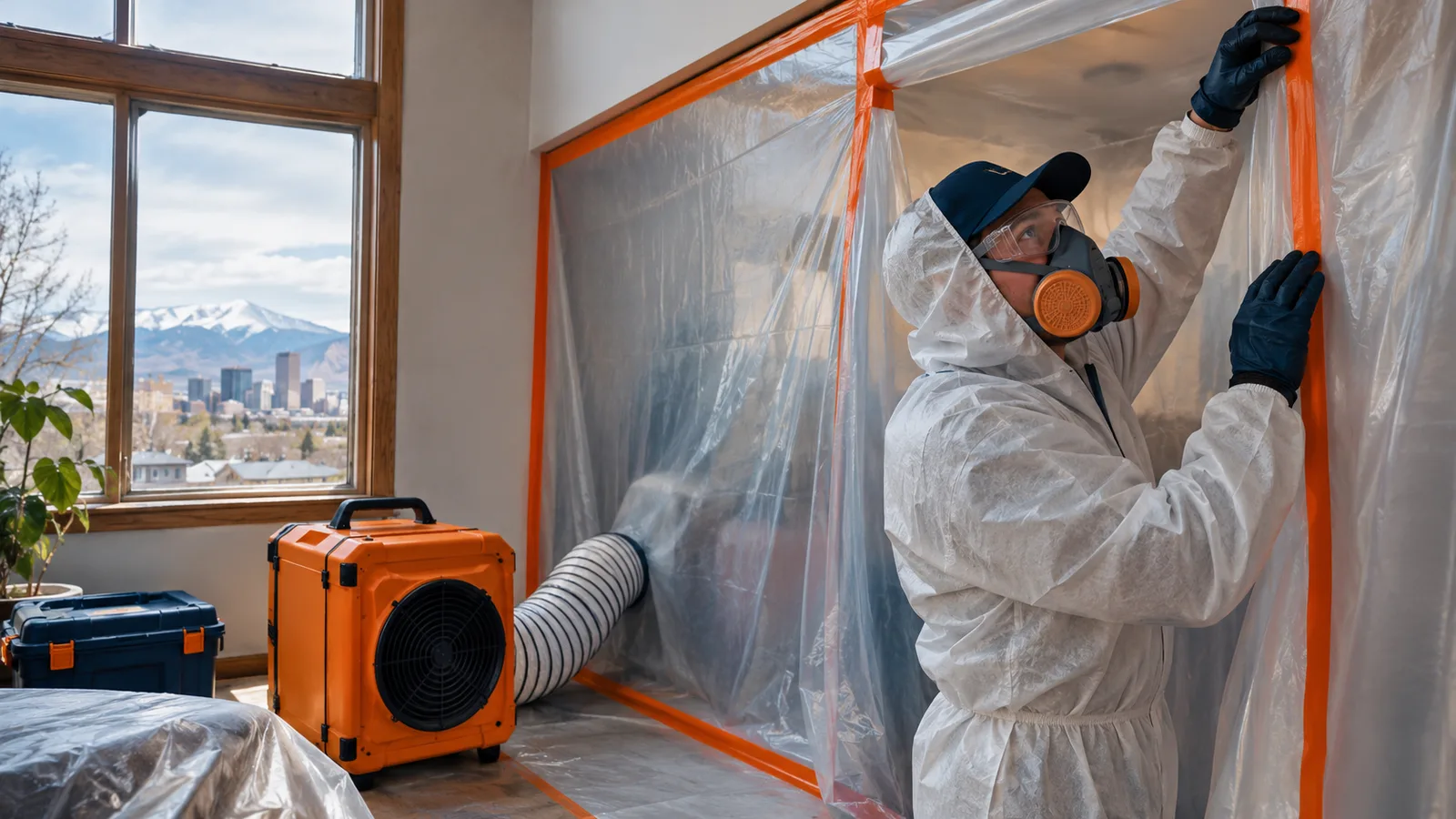
Mold abatement Denver property owners request should address both visible growth and the moisture that allowed it to develop. The work may involve evaluating affected materials, isolating the work area, controlling airborne particles, removing materials that cannot be cleaned, and treating salvageable surfaces with appropriate methods.
Denver properties can develop moisture problems after plumbing leaks, roof damage, drainage issues, appliance failures, or water entering a basement or crawl space. Snowmelt and rapid temperature changes can also expose weak points around roofs, foundations, and exterior openings. Once moisture is found, the source must be repaired or managed so abatement is not limited to surface cleanup.
A sound scope distinguishes between materials that can be cleaned and porous materials that may require removal. Drywall, insulation, carpet padding, and some composite products can hold contamination beneath the surface. Wood framing and other structural materials may be cleaned when their condition allows. The right method depends on the material, moisture level, affected area, and source of water.
Inspection through remediation
Sampling and laboratory analysis can help identify whether suspected growth is mold and document conditions when testing is appropriate.
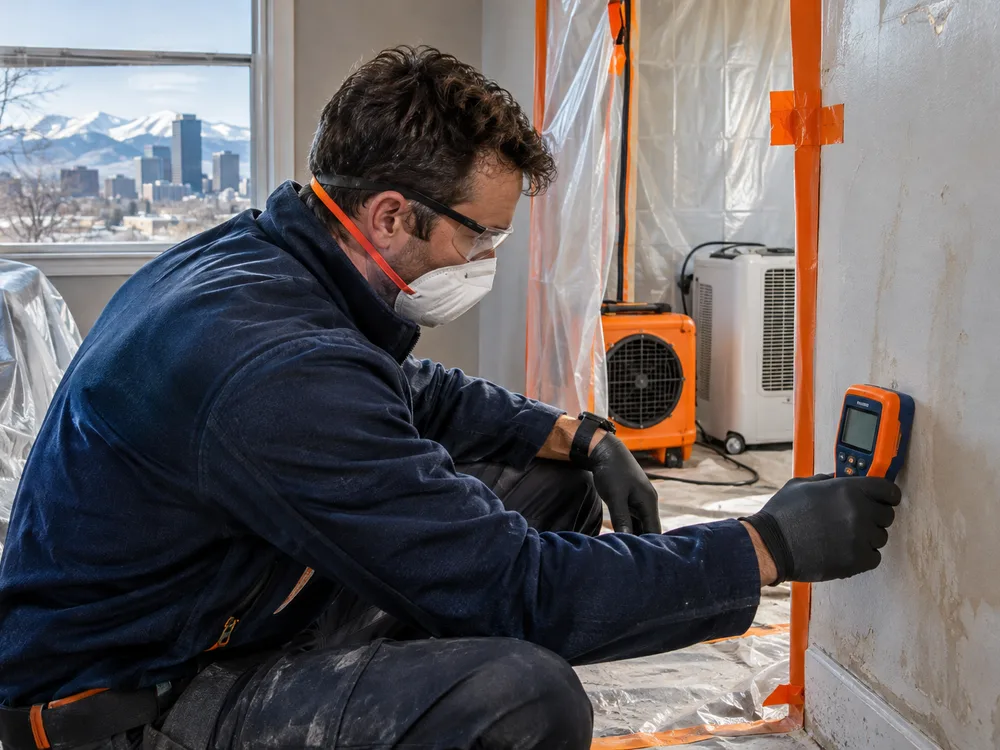
A detailed inspection looks for visible growth, moisture sources, water damage, and conditions that may require further investigation.
Remediation addresses contaminated materials and underlying moisture conditions through a planned process suited to the affected property.
Removal focuses on safely taking out mold-damaged porous materials and cleaning surfaces that can remain in place.
Start with an on-site inspection to identify the affected materials, moisture conditions, and practical next steps.
Book Your Free InspectionPlan before materials are disturbed
The affected area is evaluated for likely water sources such as plumbing leaks, roof entry, foundation seepage, or condensation. Addressing that source is necessary before repairs conceal the underlying condition.
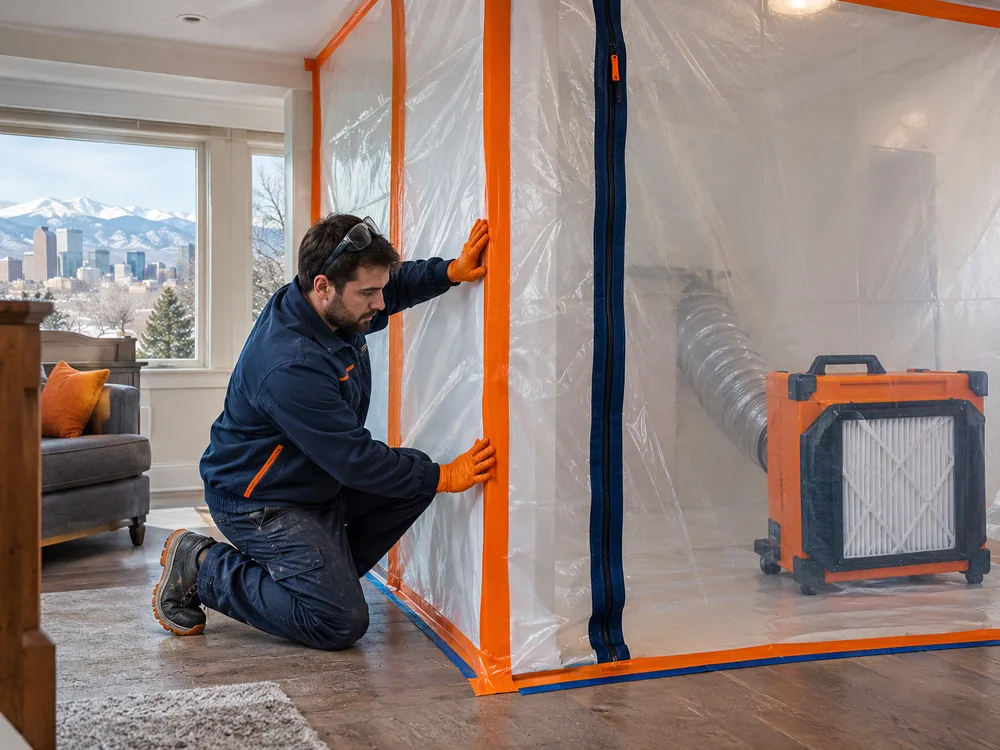
Plastic barriers and controlled work practices help separate the affected space from occupied rooms. The containment setup depends on the location, project size, access points, and materials being disturbed.
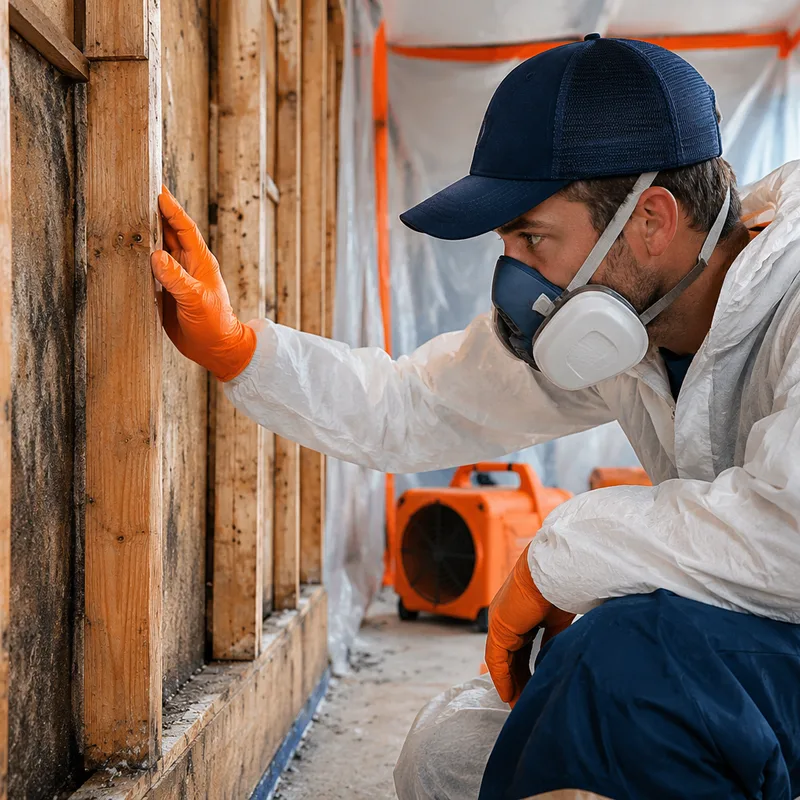
Porous and nonporous materials respond differently to mold. Drywall or insulation may need removal, while sound framing and hard surfaces may be cleaned using methods appropriate for their condition.
HEPA filtration, careful material handling, and detailed cleaning help control dust and spores during the work. Debris is contained before it is moved through the property for disposal.
Affected materials and surrounding spaces must be dry before reconstruction begins. Ventilation, drainage, plumbing, or building-envelope corrections may be recommended based on the moisture source that was found.

Property-specific planning
Mold Abatement Denver provides mold abatement services in Denver, Colorado.
The team approaches each property by looking at the affected materials, the extent of visible damage, and the moisture conditions behind it. That information shapes the containment, removal, cleaning, and drying plan. Homes, rental properties, and commercial spaces can require different access and occupancy considerations, so the scope should fit the building rather than rely on a one-size-fits-all treatment.
Clear communication matters when walls, flooring, or insulation may need to be disturbed. Property owners should understand what is affected, which materials may remain, what must be removed, and what moisture correction is needed before repair work starts.
Project pricing
Mold abatement in Denver typically costs about $1,500 to $6,000 for a contained residential project. A small, accessible area may cost roughly $750 to $2,000, while extensive contamination involving demolition, difficult access, or several rooms can exceed $10,000.
Final price depends on the affected square footage, material removal, containment needs, moisture damage, access, disposal, and whether testing is appropriate. Plumbing, roofing, drainage, and reconstruction are often separate costs. The exact cost is confirmed after an on-site inspection defines the work area and scope.
Inspection to final review
The process starts by reviewing visible damage, moisture readings, affected materials, and likely water sources. Testing may be considered when conditions are unclear or documentation is needed.
A work plan identifies containment boundaries, materials that may require removal, surfaces that may be cleaned, and moisture corrections needed before the area can be restored.
The work zone is separated from surrounding rooms. Protective barriers, controlled access, and air filtration are selected according to the area and the work being performed.
Unsalvageable porous materials are removed carefully. Remaining structural and hard surfaces are cleaned using appropriate methods, followed by detailed HEPA vacuuming of the contained area.
The area is dried and checked before containment is removed. The final review considers cleanliness, material condition, moisture levels, and whether independent clearance testing is appropriate.
Get the affected area evaluated before new finishes hide moisture damage or contaminated materials.
Book Your Free InspectionLocal property context
Mold Abatement Denver works throughout Denver in properties with varied construction, foundations, and moisture exposure.
Early twentieth-century houses and later additions can conceal plumbing leaks or roof-related moisture behind finished walls, ceilings, and built-in cabinetry.
Historic homes and multifamily buildings often have layered renovations, shared walls, and limited utility access that can complicate containment and material removal.
Older brick houses may have basements, aging plumbing, and finished lower levels where seepage or a slow leak can remain unnoticed.
Older bungalows alongside remodeled homes can contain mixed building materials, making careful assessment necessary before drywall, insulation, or flooring is disturbed.
Split-level and ranch-style homes can develop hidden moisture around lower-level rooms, utility spaces, bathrooms, and plumbing runs after leaks or drainage problems.
Mid-century houses may have finished basements and older supply or drain lines, so moisture can spread behind wallboard before visible staining appears.
Field process

Homeowner questions
Scheduling depends on current availability and the urgency of the moisture problem. Active leaks should be stopped promptly, and wet materials should be assessed before additional damage spreads behind walls, flooring, or ceilings.
Testing is not required for every project. Visible growth with a known moisture source can sometimes support a clear work scope, while hidden conditions, disputed sources, or documentation needs may make sampling useful.
Occupancy depends on the location and extent of the work. A contained room may allow other areas to remain usable, but larger projects, HVAC involvement, or sensitive occupants may require temporary relocation.
Reconstruction should be identified separately in the project scope. Abatement may require removing drywall, insulation, trim, flooring, or cabinetry, and replacement should begin only after moisture conditions are corrected and the area is ready.
Yes, the service can address homes, rental properties, and commercial spaces in Denver. Access, occupant communication, containment placement, and documentation are considered when planning work in occupied or shared buildings.
Start by describing where the problem is located, when it appeared, and whether there is an active or recent water source. Photos and prior inspection or testing documents can help prepare for the on-site evaluation.
Plan the next step
Describe the affected area and known moisture source. Mold Abatement Denver can evaluate the conditions and outline the next practical steps for your property.