
An Unexplained Musty Odor
Odor without visible growth may justify a targeted inspection of wall cavities, cabinets, utility areas, or other spaces near possible moisture sources.
Serving Denver, Colorado & surrounding areas
Mon–Fri 8am–6pm · Sat 9am–2pm
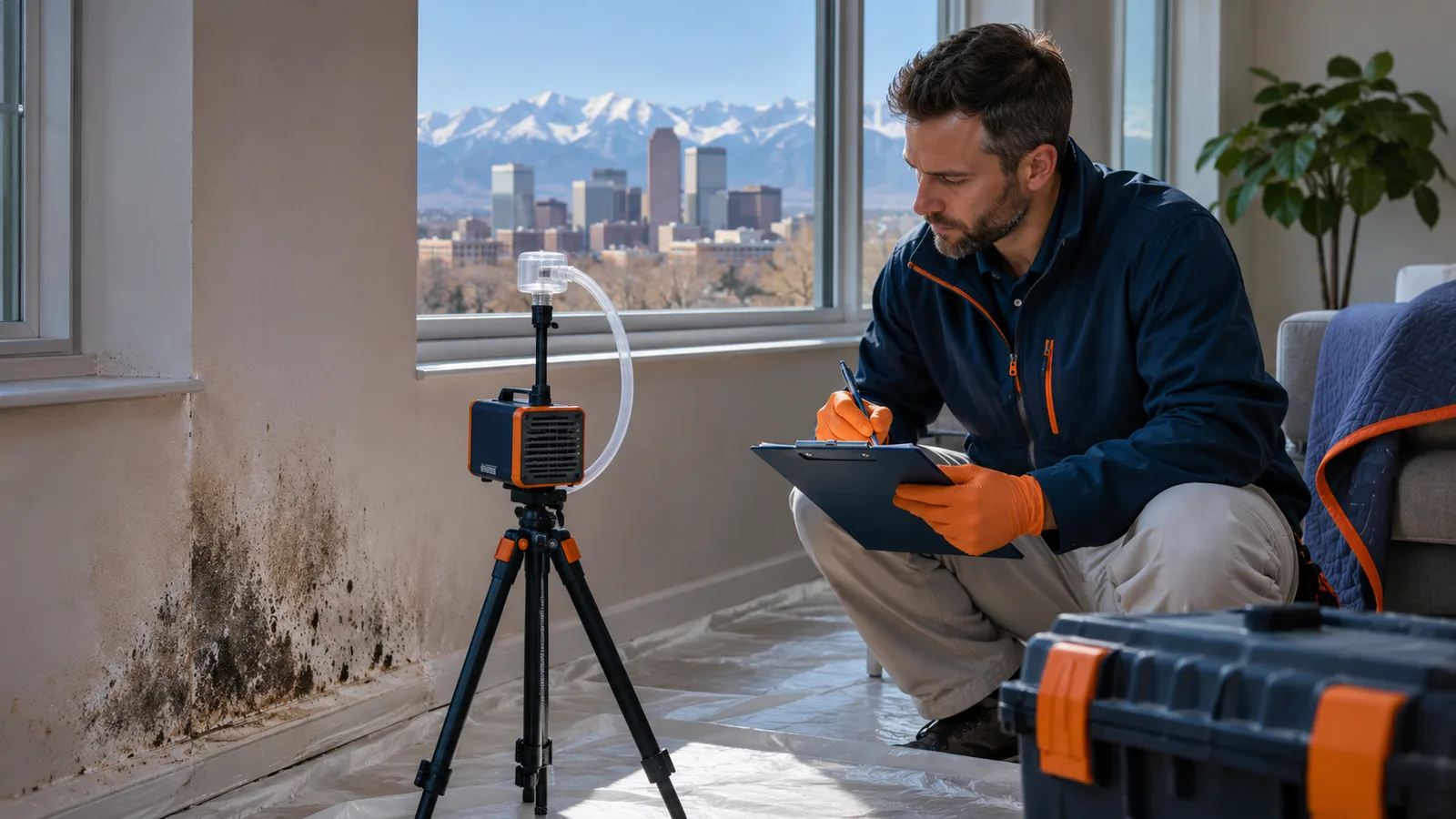
Mold testing · Denver, Colorado
Get a careful property inspection, properly collected samples, independent laboratory findings, and practical guidance based on the evidence.
Evidence before assumptions
Professional mold testing in Denver can help determine whether suspected growth or elevated airborne spores warrant further action. A useful assessment starts with the building, not the sample kit. We look for staining, damaged materials, condensation, plumbing leaks, roof or foundation moisture, and ventilation conditions that may explain what is happening.
Testing is most valuable when there is a specific question to answer. It may help when an odor has no visible source, after a leak has been repaired, during a real estate decision, or when occupants want documented findings before planning next steps. Sampling alone cannot identify why moisture entered the building, so inspection and moisture measurements remain central to the work.
As an experienced mold abatement team in Denver, CO, we approach testing as an evidence-gathering process and explain what the observations and laboratory results mean for the property. The goal is a defensible record that separates confirmed findings from assumptions.
Inspection and sampling scope
The visit begins with a discussion of the property's history. Recent plumbing failures, roof leaks, appliance overflows, foundation seepage, persistent condensation, and prior repairs can direct the inspection toward likely moisture paths. The inspector then evaluates accessible rooms and building materials for visible growth, water staining, deterioration, and unusual odor.
Moisture meters can help compare suspect drywall, wood, or other materials with nearby reference areas. Infrared cameras may reveal temperature patterns worth investigating, but thermal imaging does not detect mold and should not be treated as proof of moisture. A reading or image has to be checked against physical conditions.
When sampling is justified, the plan may include indoor and outdoor air samples, surface swabs, tape lifts, or material samples. An outdoor air sample can provide a reference for interpreting indoor airborne spore findings. Each sample should have a recorded location and follow chain-of-custody procedures before analysis by a qualified laboratory.
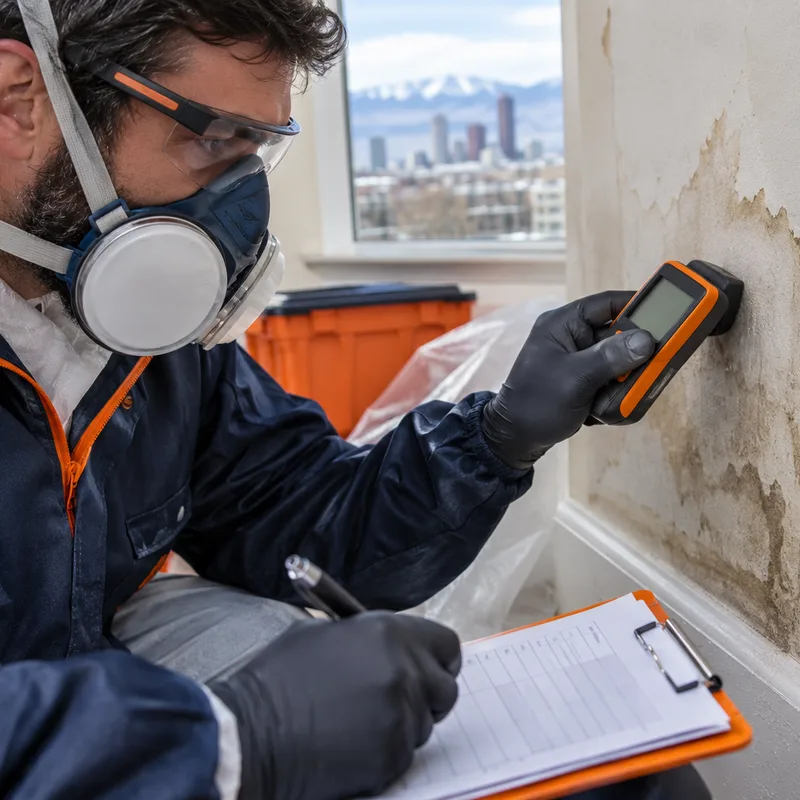
Test with a defined purpose
Odor without visible growth may justify a targeted inspection of wall cavities, cabinets, utility areas, or other spaces near possible moisture sources.
Testing may help document conditions after a pipe leak, roof intrusion, appliance failure, or basement moisture event, especially when materials remained wet or drying was delayed.
Buyers, sellers, landlords, and property managers may need written findings when staining, prior water damage, or suspect growth is discovered during due diligence.
Repeated condensation or staining calls for investigation of the moisture source. Testing may add useful evidence, but correcting that source remains the main priority.
Post-work evaluation may include a visual check, moisture review, and sampling when the written scope or project goals call for documented verification.
A structured inspection and laboratory report can replace assumptions with identified sample types, collection locations, analytical findings, and stated limitations.
Inspection to interpretation
We ask what prompted the visit, when the condition began, whether water entered the property, and what repairs or cleaning have already occurred.
The inspector checks relevant rooms and building materials for visible growth, staining, deterioration, odor, and conditions associated with moisture.
Moisture readings, photographs, room observations, and sample locations create a record of conditions present during the visit.
Air, surface, or material samples are selected only when they can answer the inspection question. Samples are labeled and transferred under documented chain of custody.
The laboratory identifies reported fungal structures or genera and provides analytical results for the submitted samples. The report is interpreted alongside the inspection findings.
We explain the results, the limits of the testing, likely moisture concerns, and whether further investigation, repairs, or a defined cleanup scope should be considered.
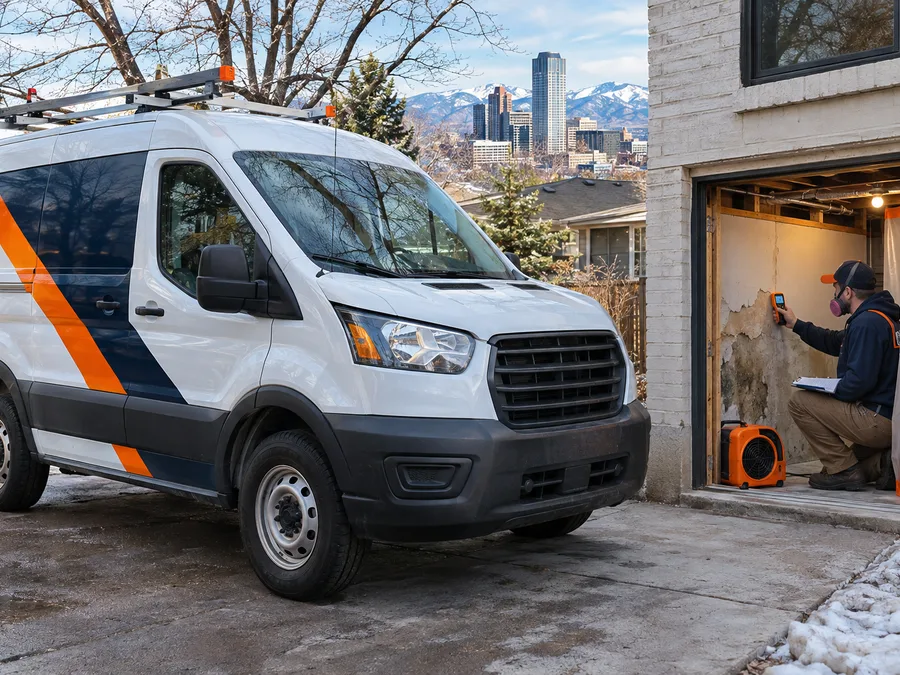
Denver property context
Denver's semi-arid climate does not eliminate indoor mold concerns. Snowmelt, wind-driven precipitation, plumbing leaks, evaporative cooler issues, and indoor condensation can still wet building materials. Rapid weather changes may also create condensation at cold windows, exterior walls, or poorly insulated surfaces. Testing should focus on the building's actual moisture history rather than assumptions about the regional climate.
Property type affects the inspection. Capitol Hill contains many older houses and apartment buildings where past roof, plumbing, or window leaks may have been repaired more than once. Washington Park has a mix of older homes and remodeled interiors, so finished basements or concealed wall assemblies may require careful moisture tracing. In newer Central Park construction, the investigation may focus more on recent plumbing, appliance, flashing, or ventilation concerns than decades of accumulated repairs.
Dense attached construction in areas such as LoDo can limit access to shared walls, mechanical spaces, or common building components. In those settings, findings inside one unit may need to be considered alongside maintenance records and building-management information. The inspection report should clearly identify inaccessible areas and other limitations.
Interpret findings in context
A laboratory result is one part of the assessment. Air samples typically report the types and concentrations of fungal structures detected in the collected volume. Surface samples can identify growth or deposited spores at a specific location, but they do not describe conditions throughout the building.
There is no single federal pass-or-fail concentration for indoor mold spores that applies to every property. Results should be interpreted using the indoor and outdoor comparison, the types of spores reported, room-to-room patterns, visible conditions, moisture findings, sampling method, and the reason testing was performed. A low air result does not disprove hidden growth, and an elevated result does not by itself identify the moisture source or exact affected area.
The report should also state limitations. Conditions can change with weather, ventilation, cleaning, occupancy, and operation of heating or cooling equipment. Sampling represents the tested locations during a particular period. A responsible interpretation avoids medical conclusions and directs health questions to an appropriate healthcare professional.
Testing scope and pricing
Professional mold testing in Denver typically costs about $300 to $700 for a focused inspection with limited sampling. Larger properties, multiple concern areas, extensive documentation, or additional laboratory samples may bring the total to roughly $700 to $1,200 or more.
The final price depends on property size, accessibility, the number and type of samples, laboratory analysis, travel, and whether post-work verification is needed. Air cassettes, swabs, tape lifts, and material samples carry separate collection and analysis needs. The exact cost is confirmed after the testing scope is discussed.
If moisture damage, staining, or an unexplained odor is raising questions, arrange an inspection before cleaning, demolition, or fresh paint removes useful evidence.
Book Your Free InspectionHomeowner questions
A focused residential visit often takes one to a few hours, while larger buildings or multiple concern areas take longer. The schedule depends on property size, access, moisture tracing, documentation needs, and the number of samples collected. Laboratory turnaround is separate and varies by the analysis requested.
Testing may be unnecessary when visible growth and the moisture source are already clear, but an inspection can still help define affected materials and document conditions. Sampling is more useful when the source is hidden, the extent is uncertain, a written requirement calls for it, or post-work verification is planned.
A home kit usually cannot provide a reliable assessment of an entire Denver property because spores are naturally present indoors and outdoors. A culture plate may show that something can grow on its medium, but it does not establish the source, extent, moisture condition, or whether the sampled location differs meaningfully from outdoor air.
Mold testing cannot guarantee that hidden growth behind a wall will be found. Moisture readings, odor, staining, construction details, and targeted cavity sampling may support the investigation, but each method has limits. Opening a wall may eventually be necessary when the evidence points to concealed damage.
Avoid unusual changes unless the inspector gives specific preparation instructions. Open windows, aggressive cleaning, air purifiers, and altered heating or cooling operation can affect airborne particles. Keep the property in its normal occupied condition and disclose any recent cleaning, construction, or ventilation changes.
A mold test generally does not produce a universal pass-or-fail result because no single federal indoor spore limit applies to every building. Interpretation considers sample location, indoor and outdoor findings, reported spore types, visible conditions, moisture measurements, and the purpose of the assessment.
Yes, post-work testing can support verification when it is paired with a visual assessment and confirmation that affected materials are dry. The scope should be established before work begins so the parties understand which areas will be checked, what samples may be collected, and how findings will be reported.
A property inspection cannot diagnose a health condition or determine individual medical causation. It can document building conditions and laboratory findings. Anyone with symptoms or specific health concerns should discuss those concerns with a qualified healthcare professional.
Define the next step
Tell Mold Abatement Denver what you have observed, where it occurred, and whether the property has a history of leaks or water damage. We will help define an appropriate inspection and testing scope.