
Moisture Assessment
The source and extent of dampness are evaluated before removal. The scope should address active leaks or humidity conditions so cleaned areas are not left exposed to the same cause.
Serving Denver, Colorado & surrounding areas
Mon–Fri 8am–6pm · Sat 9am–2pm
Mold removal · Denver, Colorado
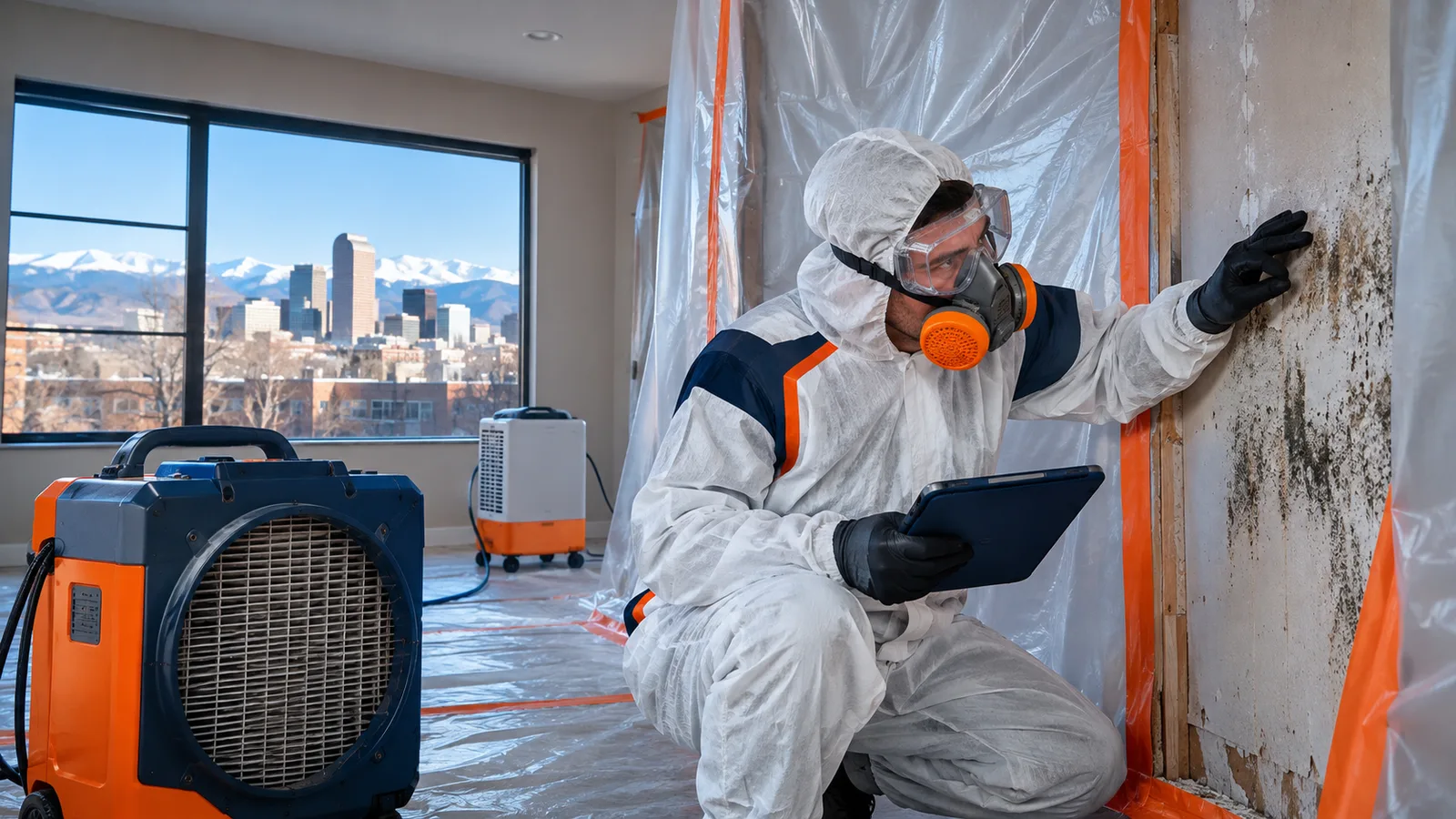
Find the moisture source, contain affected areas, and remove contaminated materials with a clear plan for your home or business.
Correct the cause
Effective Denver mold removal starts by identifying why mold grew. A roof leak, plumbing failure, foundation seepage, condensation, or poorly ventilated wet area can keep feeding growth after surface cleaning. Our team examines the affected materials, looks for the moisture pathway, and develops a scope based on what is actually found.
Mold Abatement Denver handles residential and commercial concerns with containment, controlled material removal, detailed cleaning, and practical guidance for correcting moisture. Our mold abatement specialists serving Denver, CO explain which materials may be cleaned, which porous materials should be removed, and how the work area will be isolated before remediation starts.
Denver's dry climate does not rule out indoor mold. Snowmelt, summer storms, frozen or leaking pipes, roof damage, and condensation around cold surfaces can create enough moisture for growth. Basements, crawlspaces, bathrooms, wall cavities, mechanical rooms, and areas around windows deserve prompt attention when staining, musty odors, or damp materials appear.
Inspection before removal
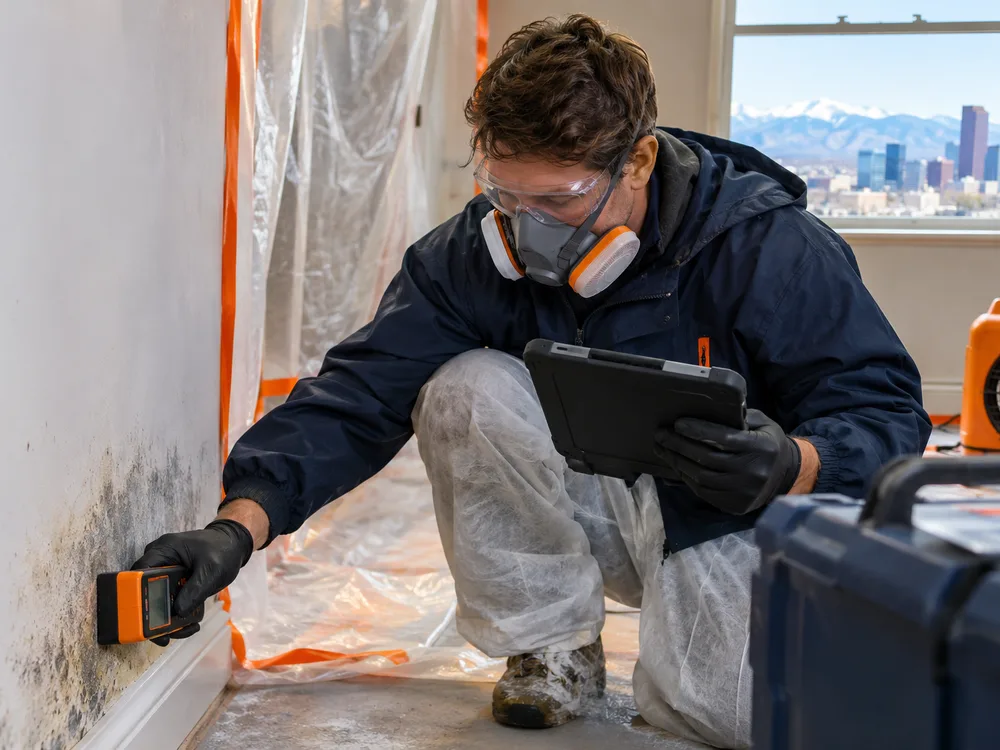
A mold concern may be visible, concealed, or spread beyond the first stained surface. Inspection begins with the building history and any known water event. Technicians then assess visible conditions and use moisture meters or thermal imaging when those tools can help locate damp materials. Thermal imaging can indicate temperature differences associated with moisture, but it does not identify mold by itself.
The inspection also considers the type of material involved. Hard, nonporous surfaces can often be cleaned when they remain structurally sound. Porous drywall, insulation, ceiling tile, or carpet pad may require removal when contamination has penetrated the material. Wood framing is assessed for surface growth, moisture content, and physical condition before a cleaning method is selected.
Older housing found in neighborhoods such as Capitol Hill and Baker can include plaster assemblies, masonry foundations, and past alterations that complicate access. In Washington Park, finished basements can conceal damp drywall or insulation after a plumbing leak. Commercial buildings in Downtown Denver may require work zones, access planning, and scheduling that limit disruption to occupants. These conditions affect the scope, not the basic standard: control moisture, contain the work, and remove contamination without spreading it.
Removal scope
The source and extent of dampness are evaluated before removal. The scope should address active leaks or humidity conditions so cleaned areas are not left exposed to the same cause.
Polyethylene barriers and controlled access separate the work zone from occupied areas. Negative air pressure and HEPA-filtered air scrubbers may be used when the size and location of the project warrant them.
Contaminated porous materials are removed using methods intended to limit dust and spores. Debris is bagged or wrapped before it leaves the contained area.
Remaining surfaces are cleaned with methods suited to the material. HEPA vacuuming and damp wiping are common parts of detailed remediation cleaning.
Moisture readings help confirm that affected materials are dry enough for the next step. When independent post-remediation testing is part of the plan, clearance criteria should be established before work begins.
Customers receive clear information about access restrictions, removed materials, moisture corrections, and any repairs needed after the remediation work is complete.
Assessment to completion
We gather details about odors, visible growth, water events, affected rooms, occupant concerns, and any repair work already completed. Photos and prior inspection reports can help define the initial concern.
The affected area and likely moisture source are assessed. A written scope identifies containment, materials to be removed or cleaned, equipment needs, access requirements, and known limitations.
Contents are moved or protected as appropriate. The work zone is isolated, pathways are planned, and filtration equipment is installed when required by the project.
Unsalvageable materials are carefully removed. Remaining surfaces are cleaned using suitable techniques, which may include HEPA vacuuming, damp wiping, or controlled abrasion for certain structural materials.
The team reviews the work area, documents the completed scope, and discusses drying, repairs, or independent clearance testing. Rebuilding should wait until the moisture problem is corrected and the area is ready.
Control the work zone
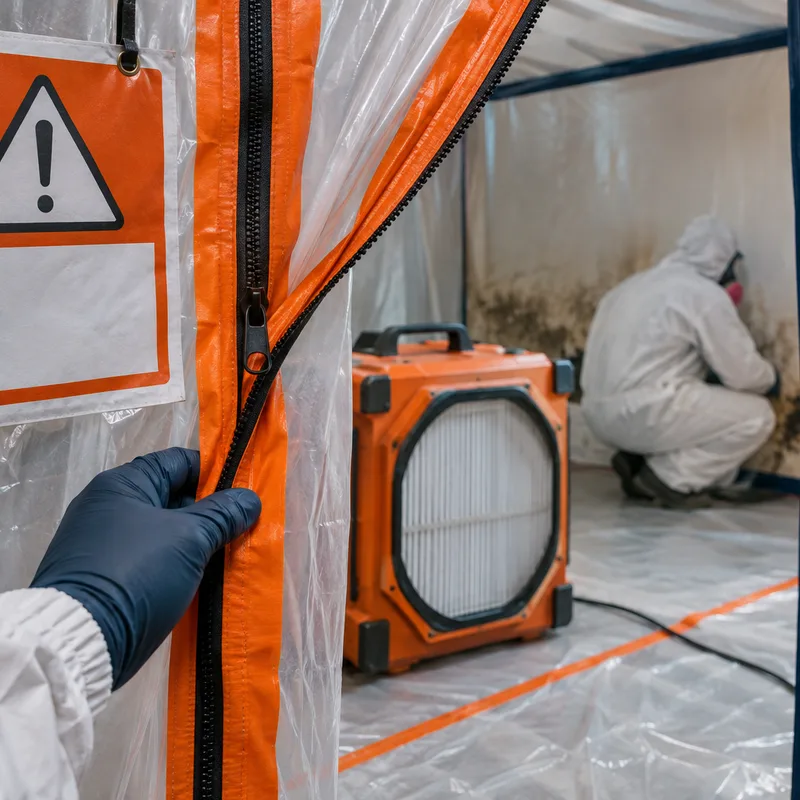
Demolition without containment can move dust and mold fragments into clean rooms. A proper work plan considers doorways, HVAC openings, shared corridors, occupied spaces, and the route used to remove debris. Supply and return vents within the work zone may need to be sealed during remediation so the air system does not distribute particles.
Personal protective equipment is selected for the task and conditions. Workers may use respirators, gloves, eye protection, and disposable protective clothing. These controls protect the crew, but they also support cleaner movement into and out of the contained area.
Occupied commercial properties require added coordination. A work zone near offices, retail space, or multifamily common areas may need off-hours scheduling and a defined path for equipment and waste. Denver property owners should also consider whether disturbance could involve lead-based paint or asbestos-containing materials, particularly in older buildings. Those hazards require their own assessment and controls; mold remediation does not replace regulated hazardous-material procedures.
Know when to call
Professional help is appropriate when growth covers more than a small, isolated surface; when contaminated drywall, insulation, flooring, or other porous materials need removal; or when the source is hidden inside a wall, ceiling, crawlspace, or HVAC-adjacent area. Recurring growth after cleaning is another sign that the moisture source or full extent has not been resolved.
Get an assessment promptly after a significant leak or water intrusion. Wet building materials should be dried as soon as practical, and any material that remains damp needs closer evaluation. Avoid sanding, scraping, or opening a stained wall before deciding how the area will be contained. Disturbing growth can spread particles and make the cleanup larger.
Health symptoms should be discussed with a qualified medical professional. A mold removal contractor can evaluate building conditions and perform remediation, but cannot diagnose an illness or determine an individual's medical risk. If a physician has provided specific precautions, share them before scheduling work so access and containment can be planned appropriately.
Get a written scope that identifies the affected materials, containment plan, moisture concern, and next steps before removal begins.
Book Your Free InspectionHomeowner questions
The cost depends on the affected area, material types, access, containment needs, and whether demolition is required. A small accessible area costs far less than contamination extending through several finished rooms or a commercial work zone. Moisture correction, hazardous-material testing, reconstruction, and independent clearance testing may be separate costs. An inspection is the soundest basis for a written price because visible staining rarely shows the complete scope.
Many contained residential projects take several working days, while larger or concealed losses can take longer. The schedule depends on setup, the amount of material removed, cleaning, drying conditions, and any verification requirements. Denver snowmelt or storm-related water entry can extend the timeline if the property is still taking on moisture. Repair work should begin only after the source is corrected and the area is ready.
Testing is not always required when visible mold and the affected materials can be clearly identified. It may be useful when the source is uncertain, the concern is hidden, documentation is needed, or an independent assessor is establishing a remediation protocol. Sampling should answer a specific question; it does not replace a moisture inspection. For independent clearance, testing should be performed by a qualified party who is separate from the remediation work.
Staying in the home may be possible when the work area can be securely contained and occupants can avoid it. The decision depends on the location and extent of work, HVAC configuration, access routes, noise, and household sensitivity. A basement project in a Denver single-family home may be isolated differently than work beside a bedroom or the only bathroom. The access plan should be settled before containment is installed.
Mold can return if moisture returns, so the leak, seepage, condensation, or humidity problem must be corrected. Remediation removes contaminated materials and cleans remaining surfaces, but it cannot prevent a future plumbing failure or roof leak. Maintain drainage, repair water entry promptly, use ventilation in wet rooms, and investigate recurring odors or stains rather than repeatedly painting over them.
Reconstruction is not automatically included in a mold removal scope. Remediation may require removing drywall, insulation, trim, flooring, or cabinetry components to reach contaminated areas. The written scope should state what will be removed, what will remain, and whether restoration is included or handled separately. In older Denver properties, rebuilding may also need to account for plaster, masonry, or prior layers of finish.
Mold can often be cleaned from structurally sound wood framing after the moisture source is corrected. The method depends on surface condition, depth of growth, accessibility, and whether coatings or residues are present. HEPA vacuuming, damp cleaning, and controlled abrasive methods may be considered. Wood that is decayed or structurally damaged needs evaluation beyond surface cleaning.
Plan the next step
Tell Mold Abatement Denver what you have observed and where the problem is located. We will help you plan the inspection, containment, removal, and cleanup needed for a safer property.