
Moisture Sources
The inspection looks for active leaks, past water entry, condensation, elevated material moisture, and drainage or ventilation conditions that may contribute to recurring dampness.
Serving Denver, Colorado & surrounding areas
Mon–Fri 8am–6pm · Sat 9am–2pm
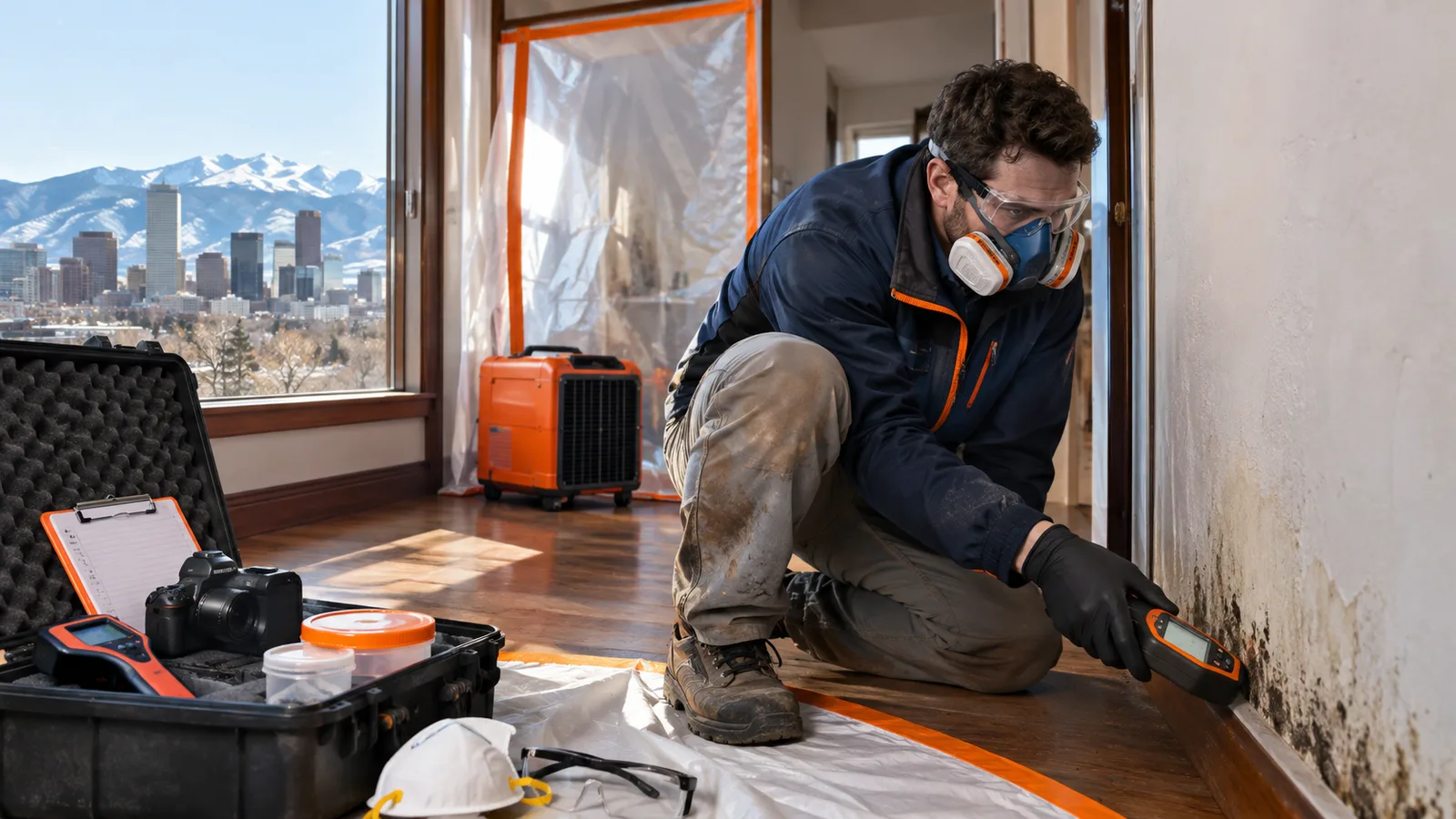
Mold inspection · Denver, Colorado
Get a careful visual assessment, targeted moisture checks, and a written record of findings so you can make an informed decision about the property.
Understand the building conditions
When moisture damage, staining, or a persistent musty odor raises concern, mold inspectors in Denver help determine where closer investigation is needed. An inspection focuses on visible conditions, moisture sources, and areas where growth may remain concealed. The goal is a useful account of what was observed, which areas appear affected, and what should happen next.
Mold Abatement Denver approaches each property methodically. During each inspection, Denver's mold abatement specialists examine accessible areas, document relevant conditions, and explain the findings in plain language. Inspection may include moisture readings, humidity measurements, photographs, and sampling when the circumstances support it. Sampling is not automatically required for every property.
Denver's dry climate does not rule out indoor mold. Snowmelt, roof leaks, plumbing failures, foundation seepage, and condensation around cold surfaces can create localized moisture. Growth can develop behind drywall, under flooring, around windows, or inside cabinets even when the rest of a building feels dry.
Inspection scope
A mold inspection begins with the history of the concern. Useful details include when an odor or stain first appeared, whether a pipe or appliance leaked, and whether repairs have already been attempted. The inspector then evaluates accessible interiors and other relevant spaces for discoloration, water marks, deteriorated materials, condensation, and conditions that can support fungal growth.
Moisture meters help compare suspect materials with nearby dry materials. A thermal imaging camera may identify temperature patterns associated with dampness, but it does not detect mold and does not prove that water is present. Any suspicious thermal pattern needs verification with a moisture meter or direct investigation.
The inspection may cover walls, ceilings, baseboards, flooring transitions, plumbing areas, mechanical rooms, attics, crawlspaces, and accessible portions of basements. The exact scope depends on the building and the reported concern. A condo with staining beneath an upstairs unit requires a different approach than a detached house with recurring basement moisture.
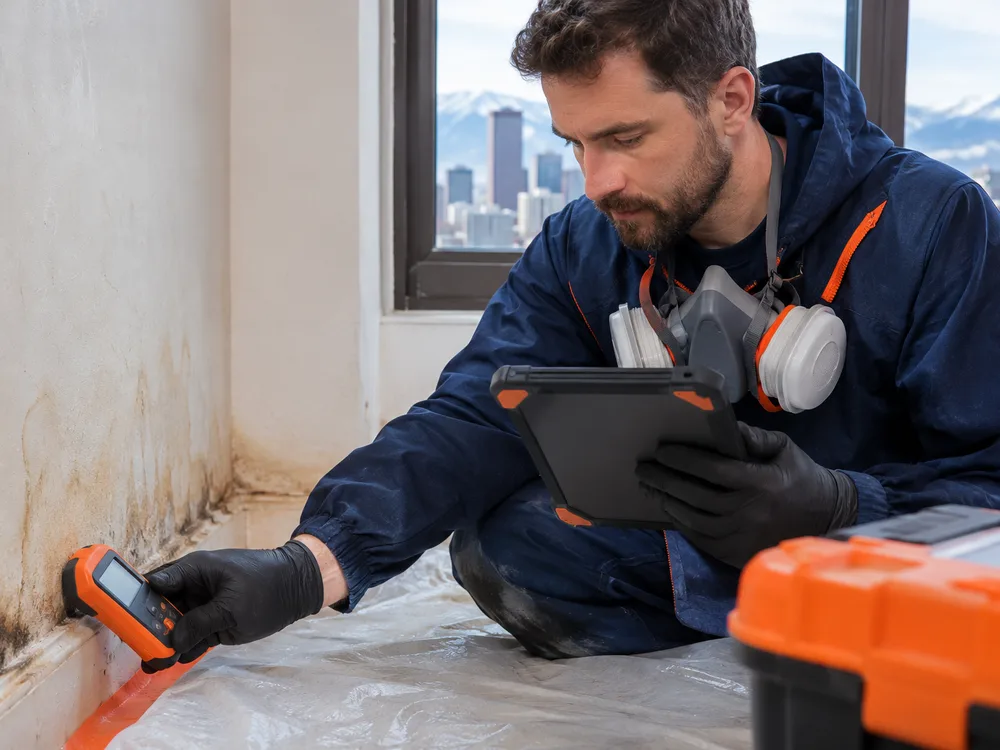
Detailed property assessment
The inspection looks for active leaks, past water entry, condensation, elevated material moisture, and drainage or ventilation conditions that may contribute to recurring dampness.
Discoloration, damaged finishes, warped materials, musty odors, and unusual surface growth can point to areas that warrant closer evaluation.
The inspector documents accessible affected materials and considers whether the observed pattern suggests a limited incident or a concern extending into an adjoining area.
Material type, occupant use, access, ongoing water entry, and possible disturbance of concealed growth all influence recommendations.
Photographs, observations, instrument readings, and practical recommendations provide a record for property owners, buyers, tenants, or contractors.
Air, surface, or material samples may be appropriate when they answer a specific question. A visible moisture and growth problem often requires source correction rather than testing alone.
Concern to recommendations
The inspector reviews the building type, affected rooms, odors or visible changes, known water events, occupant concerns, and the reason for the inspection. This conversation helps set a relevant scope.
A systematic visual examination covers the reported location and other accessible areas that may share the same moisture source. Invasive openings are not normally part of a standard inspection unless separately authorized.
The inspector uses appropriate instruments to assess suspect materials and indoor conditions. Readings are compared with surrounding areas because a single number without context can be misleading.
If sampling can resolve a defined question, the inspector identifies suitable locations and control conditions. Samples should be analyzed by a qualified laboratory, with results interpreted alongside the visual and moisture findings.
You receive a clear summary of observed conditions, affected locations, likely moisture contributors, limitations, and recommended next steps. Those steps may include leak repair, further investigation, drying, cleaning, or professional remediation.

Denver property context
Denver has a mix of older masonry homes, postwar houses, newer infill, apartments, and commercial properties. Inspection methods should match the construction. In Capitol Hill, many older apartment and condominium buildings have stacked plumbing and shared walls, so a stain in one unit may require attention to neighboring building systems. Washington Park includes older houses where finished basements can conceal foundation moisture or past plumbing leaks behind wall assemblies.
Park Hill has homes of varied ages, and additions or earlier renovations can create transitions where roof drainage, flashing, or insulation conditions differ. In newer Central Park construction, inspectors may focus on plumbing penetrations, appliance connections, windows, and localized condensation rather than assumptions based on an older building type.
Cold winter weather also matters. Condensation can form where warm indoor air reaches a cold window, exterior wall, or poorly insulated surface. During warmer months, stormwater entry and cooling-system condensate deserve attention. A sound inspection distinguishes the moisture mechanism instead of treating every stain as the same problem.
Use evidence with purpose
A mold inspection evaluates the building and its moisture conditions. Mold testing collects air, surface, dust, or material samples for laboratory analysis. Testing cannot locate a hidden leak by itself, and an air sample represents conditions during a limited collection period.
Sampling can be useful when visible growth is absent but a specific concern remains, when the extent of cross-contamination is in question, or when post-remediation verification is planned. Surface samples can help characterize growth on a particular material. Air samples may compare conditions among rooms and with an outdoor control, but they require careful interpretation because spore levels vary with weather, ventilation, activity, and sample location.
An inspector should be able to explain what question each proposed sample will answer. Testing without a defined purpose can add expense without improving the plan. When visible growth and water damage are already documented, correcting the moisture source and defining the affected materials may be more useful than identifying every organism present.
Inspection scope and pricing
A mold inspection in Denver typically costs about $300 to $700, while larger properties, extensive moisture mapping, or laboratory sampling can raise the total. A limited assessment of one accessible area may cost less than a whole-property inspection. Final pricing depends on square footage, building type, access, the number of concern areas, report detail, and the type and quantity of samples. Laboratory fees may be separate. The exact cost and scope are confirmed during scheduling or at the inspection, depending on what the property requires.
Address unexplained odors, staining, or moisture damage before finishes are replaced. A focused inspection can identify the areas that need attention and provide a practical basis for the next decision.
Book Your Free InspectionHomeowner questions
A focused inspection may take about one to two hours, while a larger or more complex property can take longer. Property size, access to attics or crawlspaces, the number of concern areas, moisture mapping, and sample collection all affect timing. Older Denver homes with finished basements or multiple renovation layers may require additional investigation.
No, air sampling is not necessary for every mold inspection. A good inspector recommends it only when the results can answer a defined question, such as whether conditions differ among rooms or whether verification is needed after cleanup. Visible growth and a confirmed leak can often support action without routine air sampling.
An inspection can identify evidence suggesting concealed moisture or growth, but it cannot guarantee detection inside every closed cavity. Moisture readings, thermal patterns, odors, staining, and building history can help narrow the location. A small investigative opening may be recommended when evidence supports it, but destructive work requires permission.
Yes, a mold inspection can be useful when the general home inspection identifies moisture damage, staining, musty odors, past flooding, or questionable repairs. It is especially relevant when a finished basement limits visibility. Schedule early enough to review the written findings within the deadlines of the purchase agreement.
Keep the concern area accessible and avoid cleaning, painting, or applying antimicrobial products immediately before the inspection. Gather photographs, leak records, repair invoices, and notes about when odors occur. If air sampling is planned, the inspector may provide specific instructions about windows, air cleaners, and ventilation.
Laboratory results are commonly available within several business days, although turnaround depends on the laboratory and requested analysis. The visual and moisture findings may be discussed sooner. Weather conditions, indoor activity, and the outdoor control sample should be considered when interpreting air results in Denver.
Yes, the findings can identify moisture sources that need correction and materials that may require removal, cleaning, drying, or further investigation. The recommendations should separate source repair from mold-related work. Roofing, plumbing, drainage, or ventilation defects may require assessment by the appropriate trade.
Yes, inspections can be scoped for apartments, condominiums, offices, and other commercial spaces. Shared walls, stacked plumbing, roof systems, mechanical equipment, and responsibility for building components can affect access and recommendations. Property management approval may be needed before opening a cavity or entering common areas.
Define the inspection scope
Describe the odor, staining, leak, or moisture concern you have noticed. Mold Abatement Denver can help define an appropriate inspection scope and explain what to expect before the appointment.